
|
PT
Classroom -
When Exercises Aren't Enough
׀ by Eric Mason, PT |
|
|
Eric Mason, PT, graduated from the Manchester
Royal Infirmary School of Physiotherapy and Victoria University of Manchester,
UK in 1992. He has gained his clinical experience in both the UK and the United
States. He is a Florida Licensed Physical Therapist and a member of the American
Physical Therapy Association and the Chartered Society of Physiotherapy UK. He
worked as a Senior Physiotherapist in Rakehead House, a nationally renowned
neurological rehabilitation unit in the UK. He was Director of Physical Therapy
for Comprehensive Rehabilitation Services, Inc in Southwest Florida, before
moving to Orlando where he developed the Physical Therapy program at the Center
for Massage & Clinical Therapy, before opening
Physiotherapy Works, LLC in
August 2004. He is currently enrolled in the Doctorate program at the University
of St. Augustine for Health Sciences. |
When Exercises Aren't Enough

Following injury or surgery, exercise is often prescribed
to rehabilitate patients to their previous level of
functional independence. Much emphasis is placed on exercise
as a treatment modality because it creates physical
improvements and has wide-ranging psychological benefits to
our patients. Exercise restores strength in muscles,
flexibility in tissues and range of motion in joints. Many
times, exercise can help restore proper muscle balance
around the joints. However, it may not be enough to restore
proper joint
mechanics.
To the untrained eye, joint motion may appear simplistic in
nature. But it is quite to the contrary. There is no single
joint that moves in only one plane of motion. For example,
when the knee extends, it does not simply roll in one plane.
In the standing position, the femur rolls forward, glides
backward and spins medially in relationship to the tibia.
These motions are referred to as accessory joint motions and
are essential to prevent undue stress on the joint and
surrounding tissues.
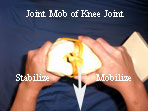
A manual physical therapist is able to assess joint
biomechanics and is trained how to manipulate the joints and
surrounding tissues. This treatment allows restoration of
all the necessary component motions and can relieve pain
from abnormal stress. In the knee example, the therapist may
have to work on restoring the glide and spin components of
joint motion between the femur and tibia to regain full
range of knee extension.
Another instance demonstrating the importance of assessing
proper joint mechanics can be a joint that appears to have
full range of motion but continues to be painful. For
example, a painful finger might have full range of classic
motion, but when the manual therapist assesses the joint,
there can be a slight decrease in the accessory joint glide
on one side of the joint. Performing the appropriate
accessory joint manipulation can, in most cases, restore the
proper mechanics within the joint and allow heal. If proper
arthrokinematics are not restored over a period of some
years, the patient can develop arthritis or tendonitis due
to abnormal stress on the joint cartilage and tendons.
The spine is probably the most complex biomechanical
structure, displaying many planes of motion between the
multiple joints and vertebrae or between the vertebrae and
the ribs. It takes countless hours of training to understand
spinal mechanics and its components. Treatment of such areas
should be left to those with the appropriate skills and
expertise. Many studies have shown that manipulation
and exercise can be extremely effective in treatment of neck
or back pain, even herniated discs.
So if you have a patient that does not seem to be responding
to their physical therapy as you might have expected, it may
be there is a component of their treatment that is being
overlooked. Joint mobilization/manipulation may be the
missing link.
Last revised: February, 11 2009
by Eric Mason, PT
|
Please review our
terms and conditions
carefully before utilization of the Site. The information on this Site is for
informational purposes only and should in no way replace a conventional visit to
an actual live physical therapist or other healthcare professional. It is
recommended that you seek professional and medical advise from your physical
therapist or physician prior to any form of self treatment.
Copyright © 2005-2012 CyberPT Inc. All rights reserved.