|
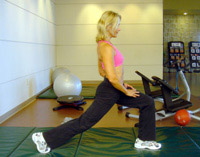
Can stretching play an important role in the success of an athlete’s
performance and in preventing injury? The jury is still out on this.
A review by the Centers for Disease Control and Prevention published
in the March 2004 issue of the journal Medicine & Science in Sports
& Exercise revealed that the research studies conducted on
stretching are insufficient in regards to the effectiveness of
stretching for minimizing muscle soreness or reducing injuries. In
some studies, the research has actually shown that stretching before
exercise tends to be counterproductive because in loosening muscles,
it also temporarily weakens them. Despite the lack of evidence to
support stretching many athletes remain committed to stretching with
the belief that stretching will help with improving performance and
reducing injuries.
Quite often, physical therapists see athletes and patients who could
benefit from stretching to help with various areas that they may be
deficient in. Such areas include: posture, range of motion,
flexibility, stress and circulation. Addressing these areas with
stretching could not only help with improving function but reduction
of injury as well.
1) Posture – Tight muscles can affect your posture thus making you
more susceptible to injuries. For example tight hip flexors along
with weak abdominal muscles can result in an anterior pelvic tilt
and contribute to increase stresses on theback.
2) Range of Motion - Muscles and tendons assist in moving a joint.
They need to be able to move a joint through the required range of
motion when participating in various activities such as running,
jumping or biking. Should these muscles be tight and limit range of
motion, than they are more susceptible to being pulled or injured as
they don’t move through the full or intended amount of range of
motion. For example a lack of range of motion at the ankle and foot
could contribute to achillestendonitis or plantar fasciitis.
3) Flexibility – As one ages, individuals often note that their
flexibility was not what it use to be compared to when one was
younger. This could be contributed to the shortening and tightening
of muscles. This limitation with flexibility, in turn, could
increase the likelihood of injury and also make exercising more
difficult.
4) Stress – Stress is quite common in our busy lives. Stress can
contribute to increase tension and tightness in muscles and have a
negative impact not only on the affected areas but also on one’s
entire sense of well being. Stretching can help with unwinding and
with releasing feel good chemicals – endorphins.
5) Circulation – Stretching has been proven to help with increasing
circulation. With improved circulation comes increase blood flow
which brings in more nutrients and takes away more waste products as
a result of exercise.
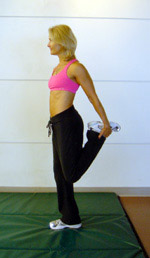
Some common guidelines for stretching are:
1. do not overstretch but do stretch to the point of slight discomfort.
2. hold the stretch for 15-30 seconds and stretch to simulate the
activity/action you will be performing
3. stretch both sides when stretching.
4. stretch all major muscle groups (ie. calves, hamstrings, quadriceps, groin, hip flexors)
videos 08, 25, 28, 30 and 24.
Last revised: June 6, 2008
by Chai Rasavong, MPT |